One Platform.
Total Resilience.
Zero Compromise.
How Commvault’s most significant platform release in company history is redefining what it means to be protected in the AI era.
The rules of enterprise security changed the moment AI went mainstream. Commvault Cloud Unity is the answer built for the world that now exists — not the one that came before.
Picture this: a ransomware attack hits your organization at 2 a.m. By dawn, your security team is scrambling across six different dashboards, three vendors, and two cloud consoles — each telling a different part of the story. None of them talk to each other. Recovery takes days. The board meeting that afternoon is not pleasant.
This fragmented reality is what Commvault set out to eliminate. At its SHIFT 2025 conference, the company unveiled Commvault Cloud Unity — described by CEO Sanjay Mirchandani as “the most significant release in our history.” It is the industry’s first platform engineered to unify data security, cyber recovery, and identity resilience under a single, AI-powered control plane.
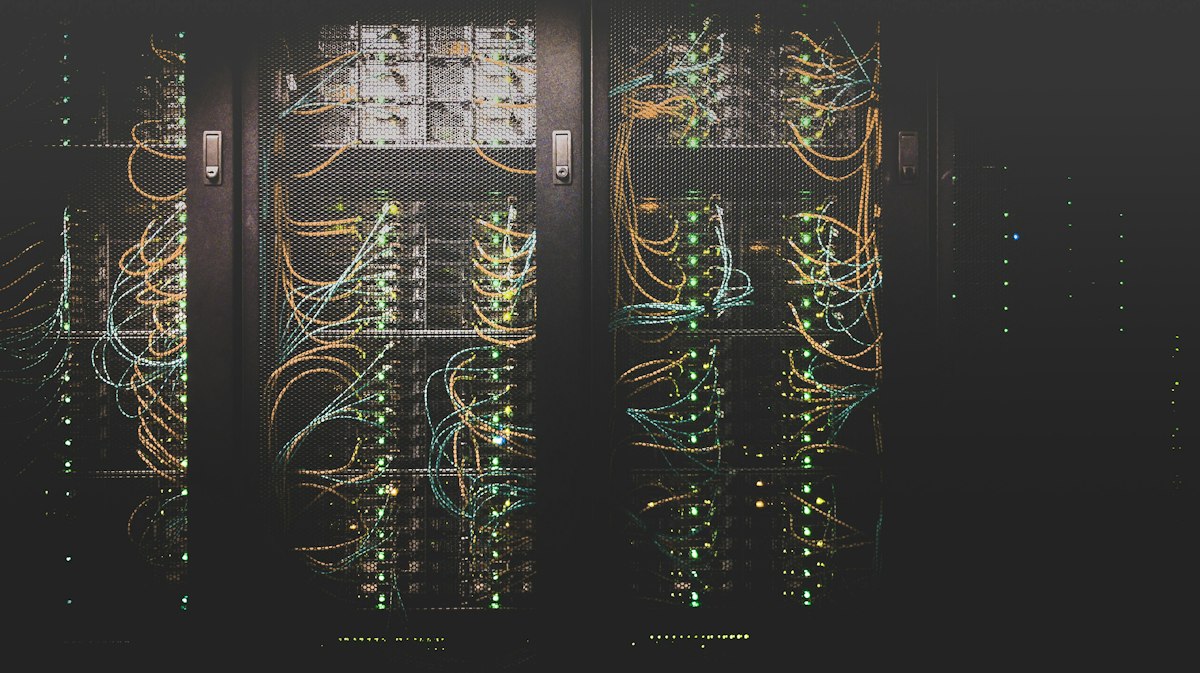 Modern enterprises operate across hybrid cloud, on-premises, and AI environments simultaneously — demanding unified visibility.
The Problem That Created the Opportunity
The modern enterprise data landscape is unrecognizable compared to five years ago. AI has created exponential volumes of distributed data. Workloads move constantly across regions, clouds, and ephemeral infrastructure. Meanwhile, threat actors have grown more sophisticated — weaponizing the very AI tools enterprises are trying to adopt.
The result is a perfect storm: security teams managing a patchwork of disconnected tools, each designed for a different era, none capable of keeping pace with today’s threat velocity. Commvault’s Chief Technology and AI Officer, Pranay Ahlawat, put it bluntly: “Enterprises are facing non-stop cyber threats, exacerbated by AI; attacks on identity systems; and recovery challenges that impact revenues and reputations.”
What Unity Actually Does — in Plain English
Unity replaces the fragmented patchwork with a single, intelligent platform that spans every environment your business operates in: public cloud, private data center, SaaS applications, and edge locations. Think of it as giving your entire IT and security organization a single source of truth — and a single lever to pull when something goes wrong.
The platform is built on five interconnected pillars, each addressing a specific gap that legacy tools left exposed:
Full-stack recovery across Kubernetes, serverless, distributed databases, and real-time AI services — restoring not just data, but metadata, configurations, permissions, and network settings.
On-premises workloads seamlessly “docked” to the same cloud control plane — eliminating bifurcated management across your data centers and cloud environments.
Active Directory treated as a live attack surface, not an afterthought — with continuous auditing, anomaly detection, and the ability to reverse hard-to-detect identity threats.
Cleanroom Recovery and AirGap Protect enable safe, isolated recovery environments. Synthetic Recovery surgically removes compromised data while recovering everything else intact.
Built to protect AI workloads at scale — including model training pipelines, agentic systems, and machine identities — with governance and human-in-the-loop oversight baked in.
Unity isn’t just another platform. It is how we bring every deployment model — cloud, SaaS, and on-premises — together under one intelligent control plane.
— Pranay Ahlawat, Chief Technology and AI Officer, CommvaultThe AI Engine Underneath
What separates Unity from a simple product consolidation is the intelligence woven throughout. Built on Commvault’s Metallic AI engine, the platform continuously discovers assets, classifies data, and recommends protection policies — scaling resilience across multi-cloud environments in minutes rather than weeks.
The platform also introduces ResOps — Resilience Operations — an automated, continuous loop that integrates data security, identity governance, and recovery into a single workflow. In a live demo at SHIFT 2025, Unity showcased conversational resilience: a natural language interface that automated cross-platform workflows across CrowdStrike, ServiceNow, AWS, and Slack simultaneously.
 AI-driven anomaly detection runs continuously across your entire data estate — identifying threats before they become incidents.
Why This Matters to You as a Leader
The board-level conversation around cyber risk has fundamentally shifted. Regulators, insurers, and shareholders now expect documented, tested recovery capabilities — not just prevention. The question is no longer “can we stop every attack?” It is “how quickly can we get back to full operations when the inevitable happens?”
Unity answers that question with precision. By unifying governance across security, identity, and recovery teams — who have historically operated with separate tools and separate objectives — it creates a coherent operational model where everyone sees the same threat, assesses the same risk, and executes the same recovery playbook.
The business case is straightforward: fewer tools to manage, faster recovery timelines, lower total cost of ownership, and a materially stronger security posture. Available on both AWS and Azure Marketplace with consumption-based pricing, Unity also eliminates the capital expense model that made enterprise resilience cost-prohibitive for many organizations.
 Unified governance means security, identity, and recovery teams finally operate from the same intelligence — accelerating decision-making at every level.
The Bottom Line
Commvault Cloud Unity is not a feature update. It is a fundamental rethinking of what enterprise resilience looks like in an AI-native world — where threats are autonomous, data is everywhere, and the cost of downtime is existential.
For C-suite leaders, the conversation is no longer about backup tools. It is about having a coherent, intelligent strategy that can protect your business, your customers, and your reputation — across every environment, at any scale, at any hour. That is what Unity was built to deliver.
The era of fragmented resilience is over. The question now is whether your organization will lead the transition or be forced into it.
Ready to Assess Your Resilience Posture?
Explore how Commvault Cloud Unity can unify your organization’s security, identity, and recovery strategy.
Learn More at Commvault.com